
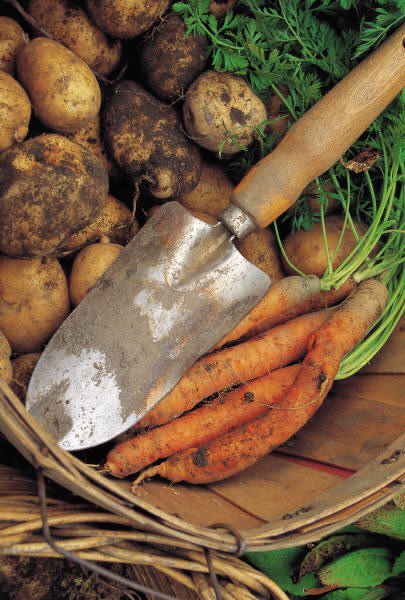
I’ve been working on the garden plan.
Initially, I thought this would be easy because in the past, I have had to cram too many veggies into too small a space, then stuff all the pretty flowers bought at the irresistible garden centre in-between. With this garden, I have more space than I could ever use, but with more options come more decisions.
100 ft. X 100 ft. of market garden has left me with infinite possibilities!
I know I want to plant the garden so that I have different vegetables ready to harvest at the same time, so I can offer variety at market.
I have dug into all my books, and several internet sites to help me out.
Two things I must keep in mind are
1) the possibilities of companion planting. Companion planting in a nutshell means that there are some veggies that work really well together. Some will be thirsty for nutrients of which the other needs less.
Lettuces, for example, prefer shady areas or areas that get dappled shade, so planting them under corn which requires plenty of sunshine, makes sense. Basil and tomatoes planted close together do better than if they are planted alone. There are so many of these companions that trying to get them all hanging out together in the garden makes perfect sense but can be a bit of an organizational nightmare.
2) Crop rotation throws another challenge at the situation. Crop rotation is good for a few reasons. First, some garden pests, after the first season, get to know where you plant your broccoli and have set up permanent homes right there with their favourite foods. Second, some plants, take peas for instance, are nitrogen rich and will replace nitrogen in the soil, making it available to the next crop placed in that plot, where other plants may use more nitrogen and leave the soil depleted. Rotating crops so that the soil is left in good condition for the specific needs of the next crop, takes the need for soil amendments way down.
From now on, we will be taking very good care of our soil. Most especially in the next few years as we will be getting our soil tested to find out what specifically it needs to grow vegetable crops.
This summer, before the soil is tested, I will stake out the placement of the garden, till the soil and remove any large rocks. A deep layer of manure will go on top of the tilled soil. Then a thick layer of straw, grass, leaves and other vegetable matter. Some bone meal and or seaweed meal to make up for several years of fallow land. Then the whole area will be covered with black landscape fabric which will let in moisture and warmth from the sun but get so hot under there that weed seeds will be killed. By the time we get back there next year, we’ll peel off the landscape fabric and the ground should be wonderfully nutritious for its first planting. We’ll test the soil and see if it requires a tweak here or there, and we are off to the races!!
I’ll have oodles of space for early tomatoes, peas, both dried and string beans, beets, swiss chard, carrots, parsnips, brussels sprouts, asparagus, artichokes, pumpkins, summer squash, lettuce and spinach and every other vegetable seed I can get my hands on. I’ll be saving seed from these gardens, too so need to be careful to only plant one variety at a time so I don’t cross pollinate and come up with untrue varieties. I am using heirloom seeds, after all. Don’t want to mess ’em up!
I am open to suggestions on what to plant, so if you have a favourite, let me know and I’ll give it a go!
I have planned out a few other gardens that I’m not sure I will be able to start on this summer, but I’m sure going to give it my best shot. The medicinal garden, the herb garden and the kitchen garden.
Things like “Devil’s claw” or “Harpagophytum procumbens” is its botanical name, for the medicinal herb garden. This herb is from the sesame family and its’ root is used to reduce pain and fever as well as to help with digestive issues. Its seed pod is what I suspect gives its the sinister name. It looks like a large black, twin tined claw.
Another plant for this garden is “prunella vulgaris” or “Heart of the earth” or “Common self-heal” or ” All Heal” which, as its name implies is used for an antiseptic, an antiviral agent, and inhibits growth of bacteria, too! All parts of the plant are edible and it looks really pretty in a salad. It grows almost like a lavender flower. Look for it – it’s gorgeous!
Spearmint, Lemon balm, Fennel, and Thyme are just a few of the herbs that will go both in the kitchen garden and the herb garden. I think they warrant the two spots since I use them so much.
I hear it’s always a good idea to plant Rosemary by the garden gate, to keep a happy home. Just superstition, I’m sure, but I’m not above paying attention to a little superstition now and again.
I will take a bunch of pictures of the gardens before, during and after preparations to give you an idea of what’s entailed.
Meantime, I hope you are all enjoying the planning stages or planting stages of your own gardens!
 lifehomemade